Fitment Liquid Fillers

Fill your fitted bag or pouch through its own spout, cleanly and accurately.

Filling through fitment

Aseptic or non-aseptic, from cask to IBC.

A fitment liquid filler handles a flexible bag or pouch fitted with its own spout: it locates the fitment, uncaps it, fills a measured volume through it, and re-caps it, all without the product touching open air.

That makes it the format of choice wherever oxygen pick-up, shelf life or bulk handling matter, from retail wine casks through to thousand-litre IBCs.

Non-aseptic machines cover chilled and ambient product on standard hygiene.

Aseptic machines add sterilise-in-place, a sterilant steam to the capping area and a validated sterility interlock, so product from a UHT process can be filled for ambient shelf life.

Product contact surfaces are AISI 316 and comply with FDA, 3-A, BPE and AS1528 sanitary standards.

What type of fill?

  • Semi-automatic and fully-automatic fillers from 2 litres to 1,500 litres, plus 200 litre bag-in-drum and 1,000 litre IBC
  • Aseptic range with sterilise-in-place, sterilant spray, and a sterility interlock that holds filling until barrier and return temperatures are proven at setpoint
  • Fill accuracy of ±0.5% by volume as standard, to ±0.1% with a mass flowmeter — and some configurations measure Brix inline
  • Change parts available to suit any snap spout, cap, tap or valve currently on the market
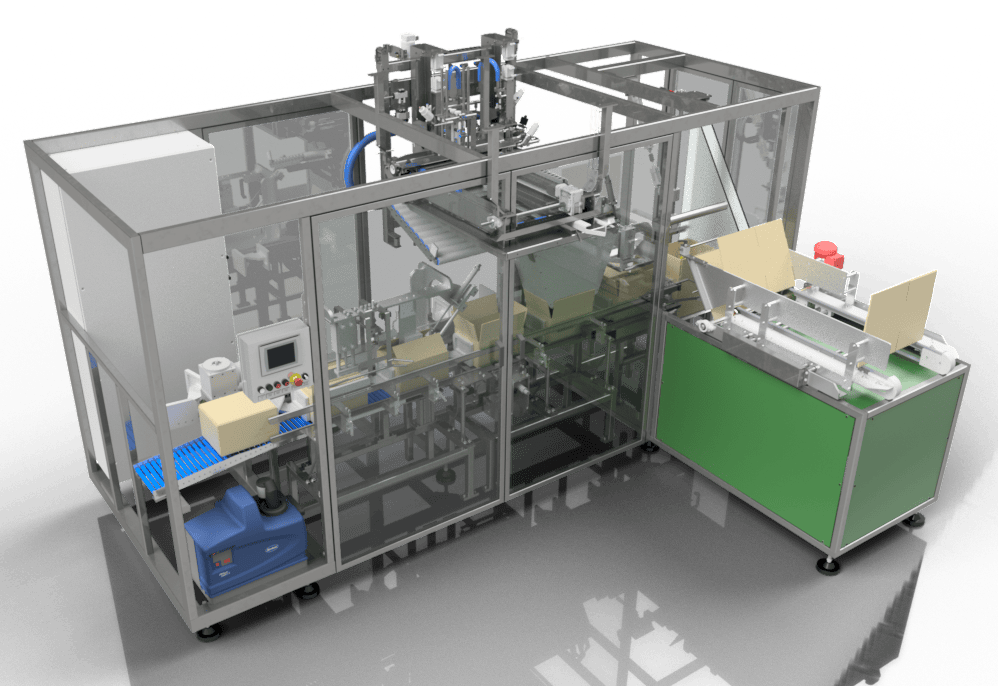
  • Integrates directly with our case packers, so the filled bag goes straight into an erected, sealed carton on one control platform

APPLICATIONS

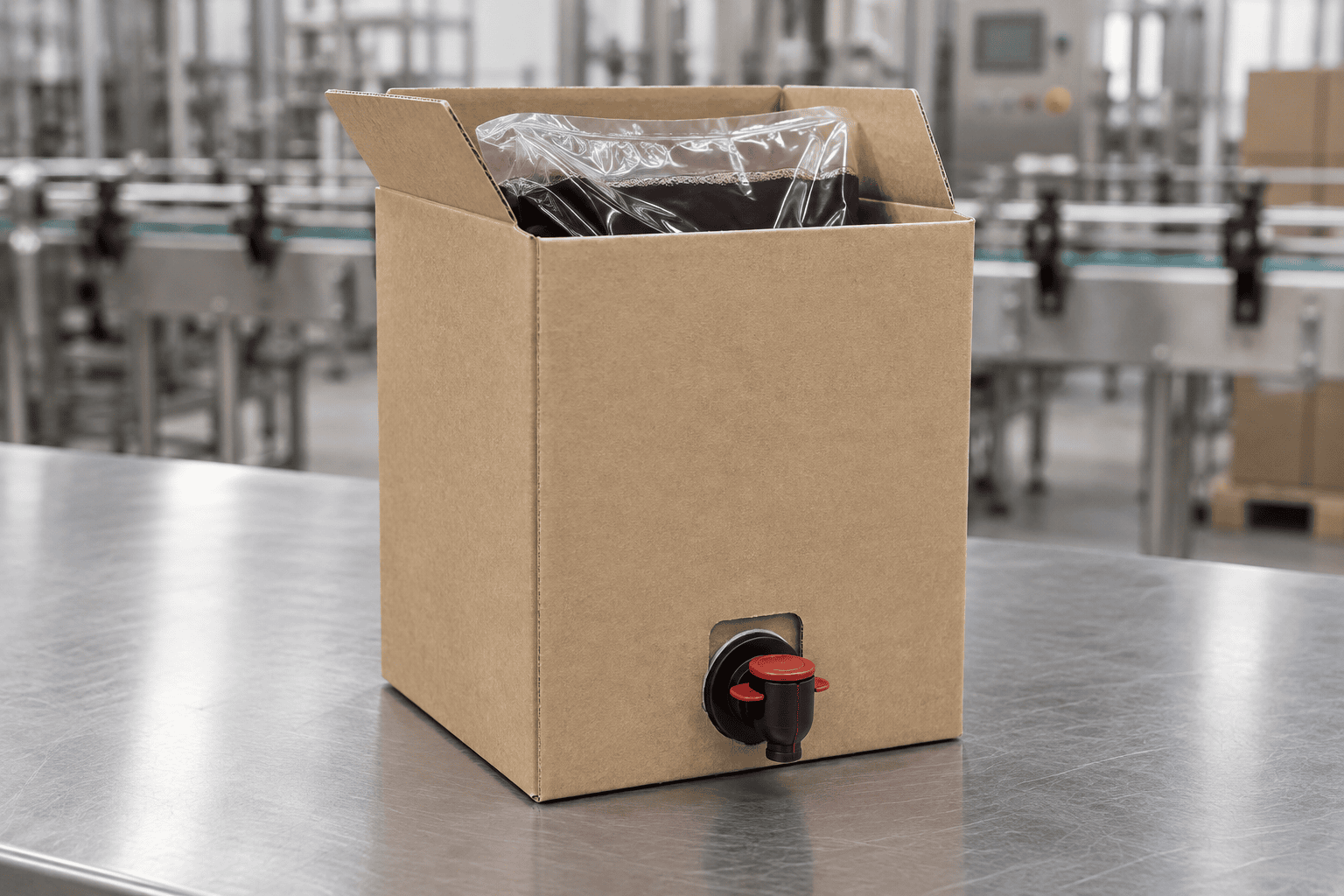
  • Cask wine bag-in-box with a fitment tap on a stainless bench beside a filling line

    Wine, beer & soft drinks

    • Cask wine · DO-controlled wine · beer
    • Soft drinks
    • Postmix concentrate & syrup
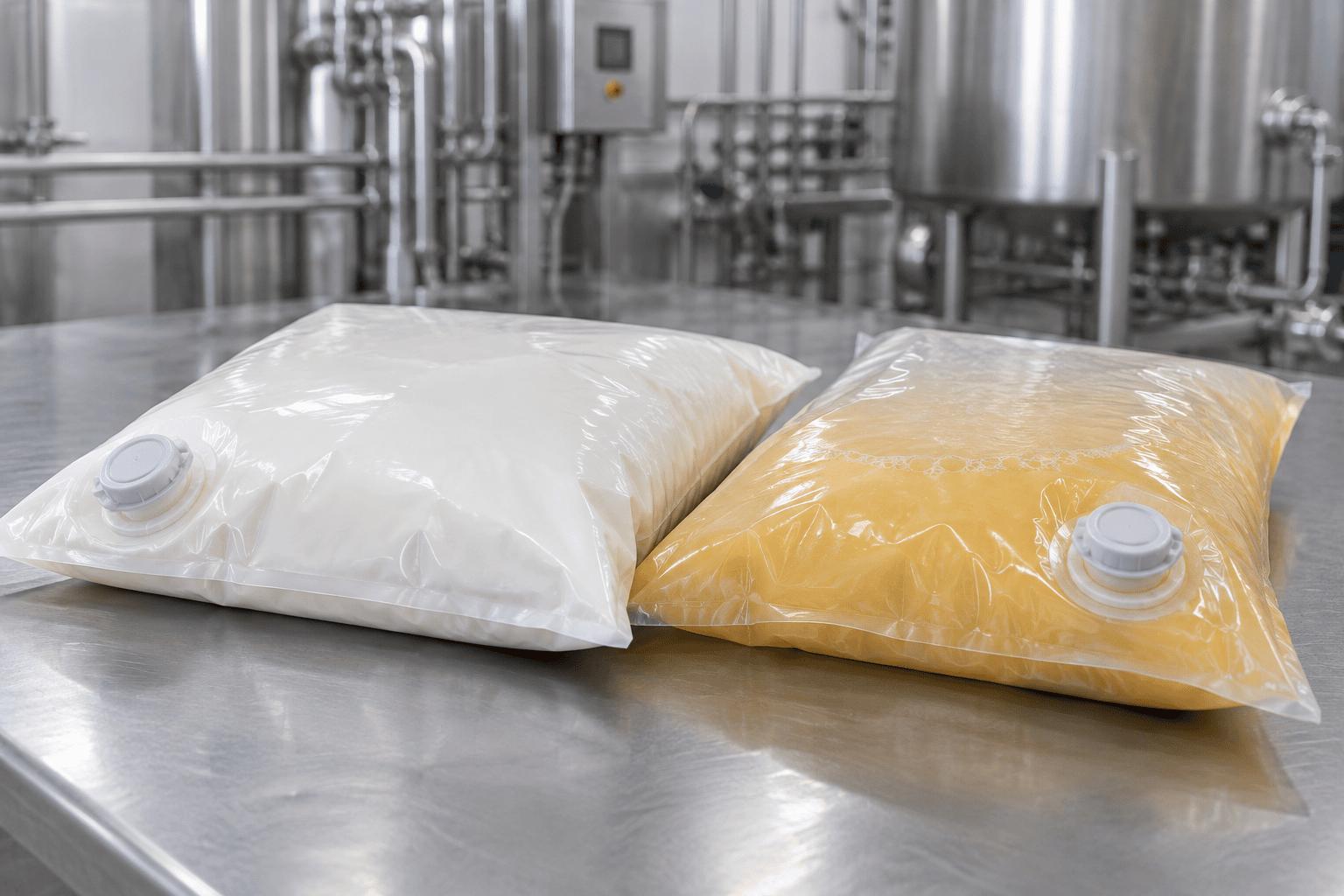
  • Fitted bulk liners of UHT milk and liquid egg on a stainless bench in a dairy plant

    Dairy & liquid foods

    • UHT milk · cream · yoghurt
    • Cheese products · plant-based milk
    • Liquid egg
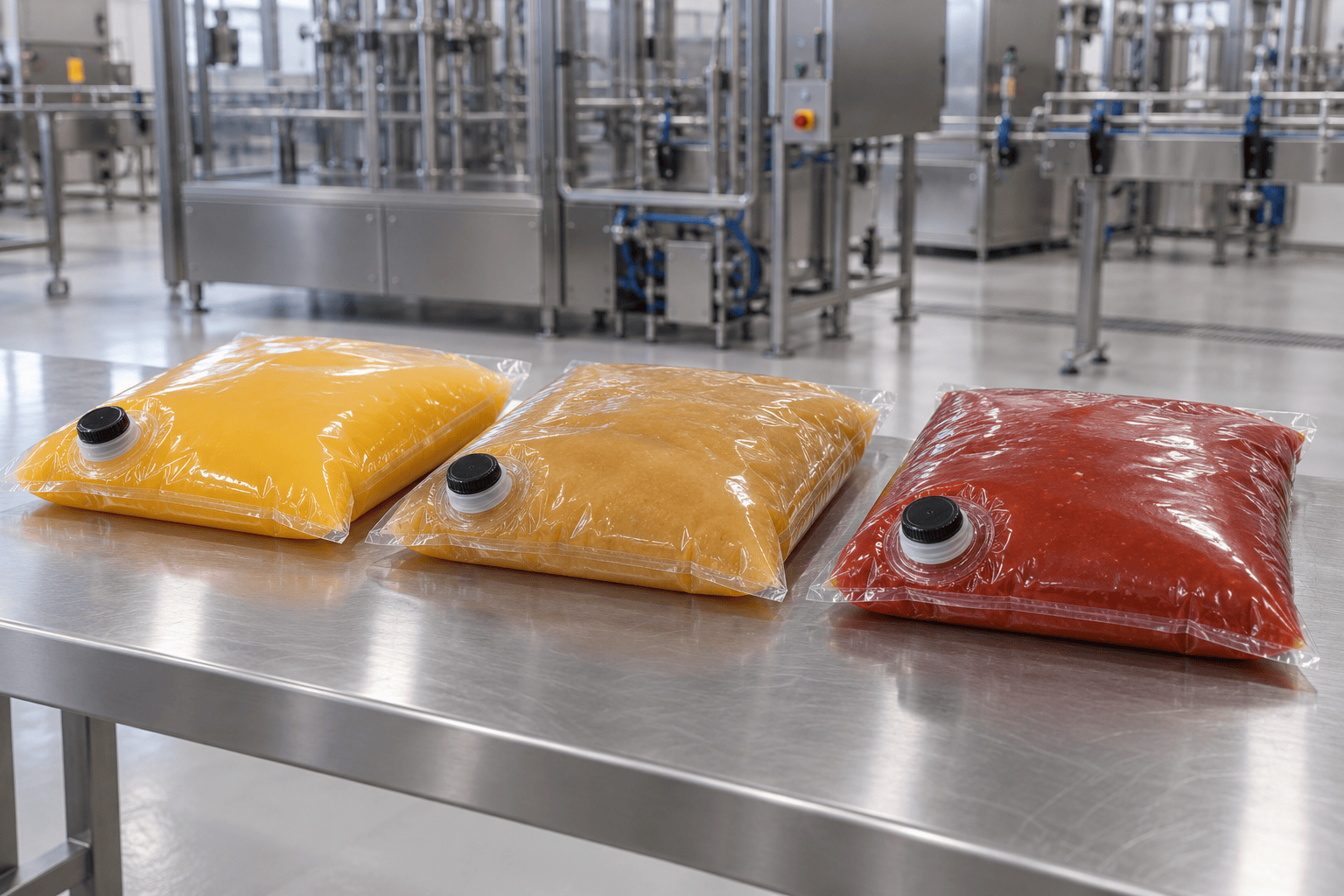
  • Fitted industrial liners of juice, fruit purée and tomato sauce on a stainless bench

    Juices, sauces & oils

    • Juice · concentrate · purée
    • Sauces, hot-filled & mayonnaise-based
    • Cooking oils · coffee & flavour concentrates
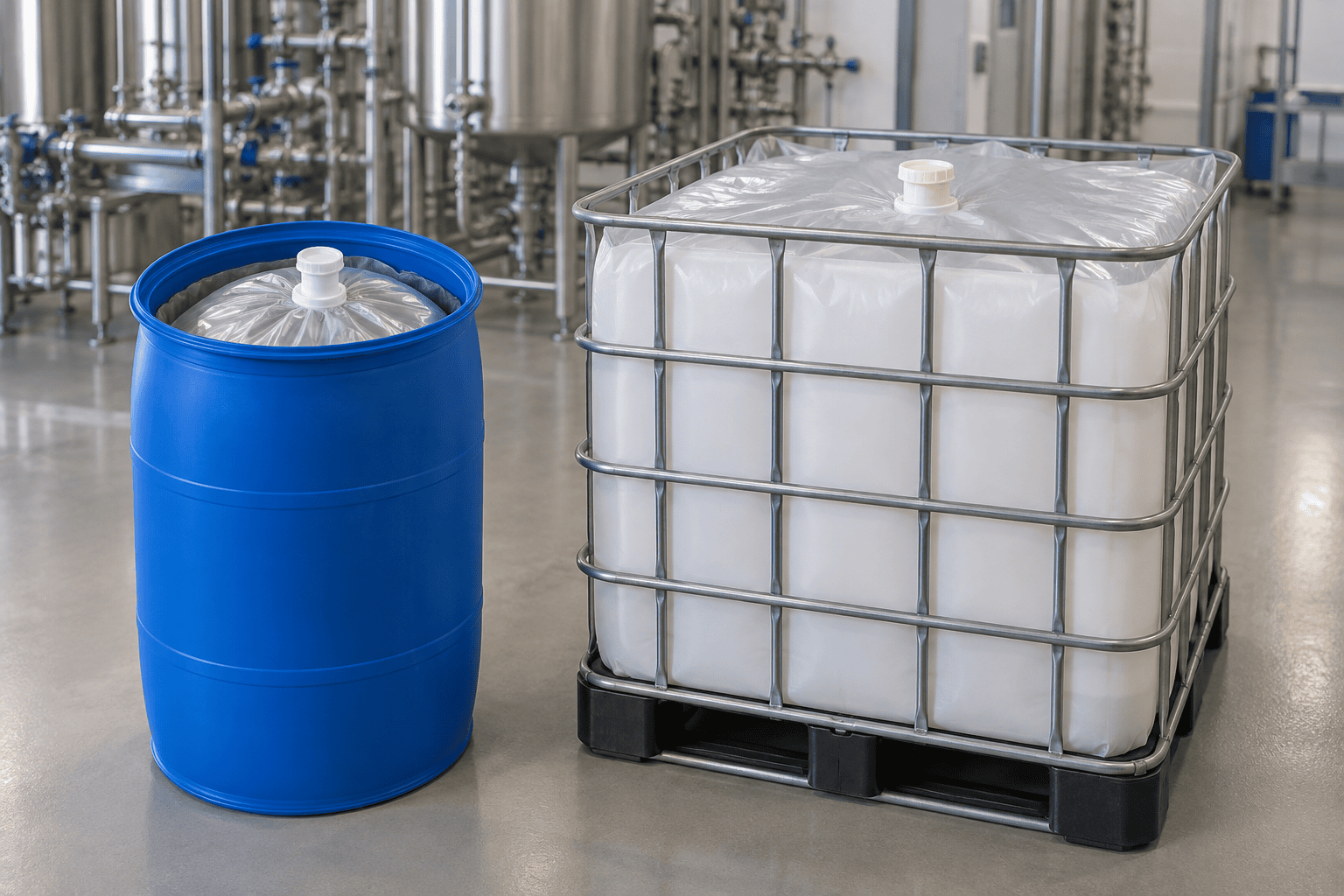
  • Aseptic bag-in-drum liner and 1,000 litre IBC liner with fitment caps in a process hall

    Water, frozen & special products

    • Bottled & bulk water
    • Ice cream · seafood
    • Pharmaceutical, sterile liquids & personal care

What makes our solutions different

  • Award-winning expertise

  • Robust engineering

  • On-site & 24/7 remote support

  • Australian made

ASEPTIC

Aseptic filling is used when a product has to stay shelf-stable without refrigeration or preservatives. Typical examples are dairy, coconut water and coconut milk, plant-based milks, juices, liquid nutrition, baby food and some pharmaceuticals. The product and its packaging are sterilised separately, then filled and sealed in a sterile environment, so no microorganisms get in. The main benefit is a long shelf life, often months at ambient temperature. That lowers cold-chain and storage costs, opens up export markets and keeps the product’s taste, colour and nutrients better than heavy heat treatment after packing.

A3

Semi-automatic aseptic filler, 2 to 20 litres and up to 200 litres on the larger configuration. The entry point into true aseptic filling. Sterilise-in-place, sterilant steam to the capping area, and the sterility interlock, with an automatic bag feed available to convert it to full-auto later.
A5

Aseptic bulk filler, 2 to 1,500 litres. The distinguishing feature is range: small bag through to IBC on the same machine, with load-cell weighing for bulk duties. Suits sites filling both retail-scale and bulk formats without buying two machines.
Fitment Liquid FillersA7

Fully automatic aseptic web bag filler, 2 to 20 litres, and the fastest aseptic machine in the range. Automatic web bag feed combined with the full aseptic package, for continuous production of ambient shelf-life product straight off a UHT line.
Non-Aseptic

Non-aseptic filling suits products that are stable on their own, will be refrigerated, or are heat-treated after packing. Examples include sauces, condiments, edible oils, household and personal care products, chemicals and chilled fresh foods. It runs in a clean, hygienic environment but doesn’t need full sterilisation of the product, packaging and filling zone. That makes it simpler, faster and more cost-effective to run and maintain. It’s also flexible: changeovers between products, container sizes and formats are quicker, and it handles a wide range of viscosities, from thin liquids to thick pastes.

C3

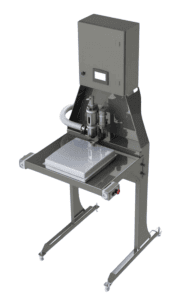
Semi-automatic, 2 to 20 litres, in a bench or table format. A compact single-head machine for chilled and ambient product where an operator presents each bag. CIP-ready, with a hot water supply to 85°C, two-hand safety start and latched E-stops both sides.

C3 Twin

The same machine with two independent filling heads, roughly doubling output from a single footprint. Each head runs independently, so a head can be cleaned or changed over while the other keeps filling.
C7

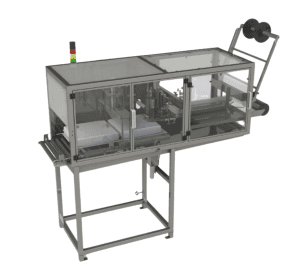
Fully automatic web bag filler, 2 to 20 litres. An automatic web bag feed replaces the operator at the infeed, which lifts output to around 600 bags per hour on small formats and takes the operator out of the cycle entirely. CIP is standard.

FAQ

What is a fitment liquid filler?

A fitment liquid filler fills a flexible bag or pouch through the spout or fitment welded into it. The machine locates the fitment, uncaps it, fills a measured volume and re-caps it, so the product is never exposed to open air. It's the standard method for bag-in-box, casks, bulk liquids and spouted pouches.

What's the difference between aseptic and non-aseptic filling?

A non-aseptic filler fills to normal food hygiene standards for chilled or ambient product with a conventional shelf life. An aseptic filler adds sterilise-in-place, sterilant spray to the capping area and a sterility interlock, so UHT-processed product can be filled and stored at ambient temperature.

How accurate is the filling?

±0.5% by volume as standard with a magnetic flowmeter. A dual-bent-tube mass flowmeter takes that to ±0.2%, and a single-bent-tube unit to ±0.1%. Bulk filling by load cell is ±10 kg. Some mass flowmeter configurations can also measure Brix inline.

What bag sizes can you fill?

2 to 20 litres across most of the range, and 2 to 1,500 litres on the bulk aseptic machine, plus 200 litre bag-in-drum and 1,000 litre IBC configurations.

What fitments and spouts can you handle?

Change parts are available to suit any snap spout, cap, tap or valve currently on the market. We hold reference libraries covering aseptic double-membrane fitments, threaded and flat-cap spouts, quick-connect couplings and 2" IBC valves.

How viscous a product can you fill?

We've supplied machines filling everything from thin juice through to heavy sauces and mayonnaise-based products. Above roughly 2,000 cP the pump and nozzle design become the determining factors rather than the filler itself, so we'll want a product sample before quoting.

Can these machines be cleaned in place?

Yes. CIP is available across the range with dedicated adapters, manifolds and return pumps, and is standard on the full-auto web bag fillers. Aseptic machines add sterilise-in-place with barrier temperature monitoring before filling is permitted.

Can a fitment filler integrate with case packing?

Yes, and it's the normal configuration. The filled bag transfers straight to a case packer that erects the carton, forms the bag to shape, loads it and hot-melt seals it. We build both halves, so the line runs on one control platform with one point of support.

Can I start semi-automatic and automate later?

Yes. An automatic bag feed is available to convert a semi-automatic aseptic machine to full-auto, so you can buy the filling capability now and remove the operator from the cycle when volume justifies it.

Scroll to Top