Vibratory Equipment

Steady, controlled flow of product, from bulk through to pack.

Moving your product

Stored, metered, lifted and delivered on demand

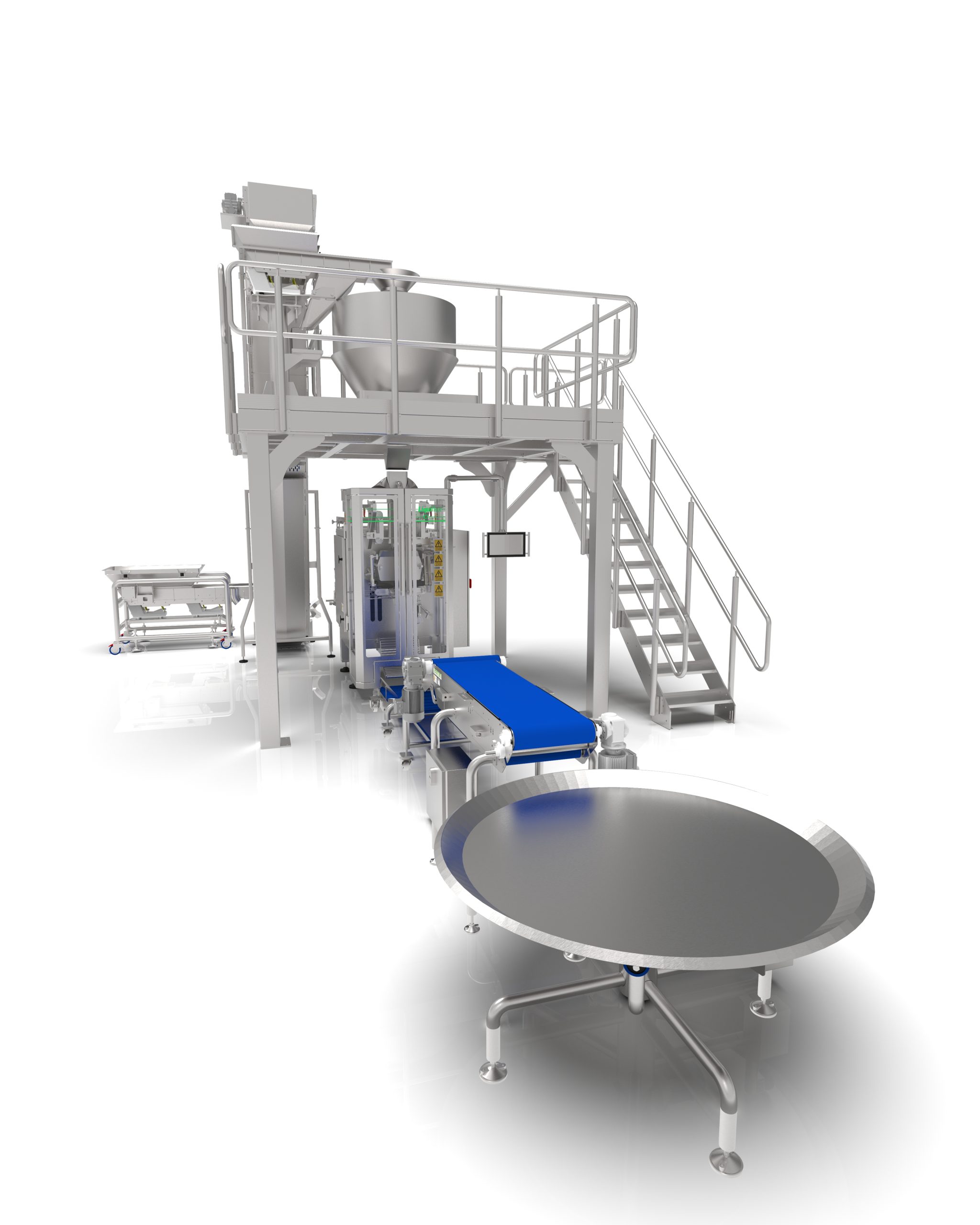
HMPS Enmin builds the equipment that gets product to your packing machine. Feeders, screeners, conveyors and the hoppers that buffer between them — designed and manufactured in Australia, in 304 stainless steel, to HACCP and the hygiene standards the Australian food and pharmaceutical industries work to.

Enmin is part of HMPS Group. That means the feed system and the packing machine it serves come from one supplier, on one control platform, with one point of support — and the interface between them is designed rather than negotiated after the fact.

Nothing is picked from a catalogue. Every unit is sized against your product’s bulk density, particle size and target rate in kilograms per hour, because a dense free-flowing grain and a light sticky confectionery behave completely differently on the same tray. Typical lead time is in the order of 16 weeks from drawing approval, with around five working days for mechanical installation and two for commissioning on a multi-item system.

What type of fill?

What makes our solutions different

  • Award-winning expertise

  • Robust engineering

  • On-site & 24/7 remote support

  • Australian made

ELECTROMAGNETIC

An electromagnetic drive vibrates the tray directly. There are no rotating parts in the drive at all, which means near-instant start and stop, very fine control at low feed rates, and almost nothing to maintain. That combination makes it the right platform for metering on demand — into a multihead weigher, a depositor or a filling head — and for handling product that chips, cracks or breaks under rougher treatment. Drives run on 240V single-phase power and consume very little of it. Controllers hold accurate frequency bands, which is what delivers high-speed filling and pinpoint dosing accuracy at the same time. Common duties include chocolate and confectionery, nuts, biscuits, pasta, milk powder and pet food.

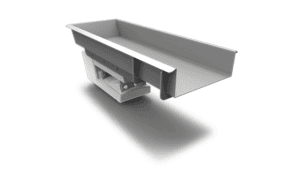
Trays

The working surface, built to suit the product and the discharge. Rectangular for general feeding, bias discharge where product needs to leave at an angle, conical for centring into a chute, fines removal where small particles need separating out, and tubular where the product must stay enclosed.
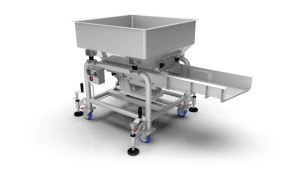
Hopper Feeder 

Bulk storage with metered discharge in one unit. Standard capacities run from 50 to 1,000 litres, and we size yours to the production period you want to run between refills — commonly 10 to 30 minutes — with low-level warning so an operator tops up before the line runs dry rather than after it stops. Non-standard capacities are built to order.
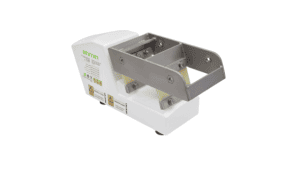
Drives

The electromagnetic unit itself, manufactured in Australia. Minimal moving parts, next to no ongoing maintenance and low energy draw, built to comply with food and pharmaceutical industry standards. The LD series covers most duties, sized to the tray and the load it carries.
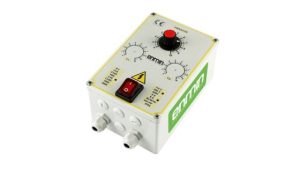
Controllers 

Standard and multi-function models, certified and compliant. Variable speed as standard, rated IP56, and wired into your packing machine’s main controls so feed rate follows demand and can be changed by recipe rather than by hand at the feeder.
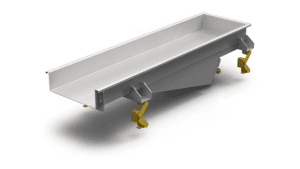
ELECTROMECHANICAL

Twin vibratory motors drive the tray, counter-rotating so their forces combine into a single linear feed. It’s the heavier-duty platform: larger volumes, denser and more abrasive product, and duties that run well beyond food into mining, quarrying, chemicals and fertilisers. Units are base-mounted or suspended, typically in stainless steel, with isolating springs or torsion mounts selected per duty and designed to keep around 98% of the vibration out of the structure holding it up. Electronic speed adjustment comes as standard and noise sits at roughly 65 dBA.

Motor Feeder

The core unit, built from one to five metres long with high head load capacity, so it takes the weight of a full hopper above it without losing feed control. Base-mounted or suspended to suit the installation.
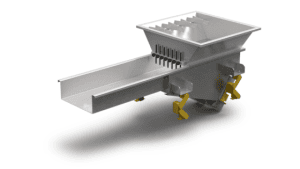
Hopper Feeder

Storage and metering for bulk material, with adjustable gating, level indicators, de-dusting and screening sections, and bag support where product is tipped in by hand. Lock-down wheels are available where the unit needs to move between lines. Suits frozen product, confectionery and dried fruit among others.
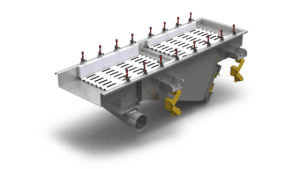
Motor Screener

A linear screener that de-lumps, sizes, or strips fines out of product before it reaches the packing machine. Stainless steel with a choice of surface finishes, in flat bed or contoured bed designs, with quick-release covers so cleaning and screen changes don’t become a shift.
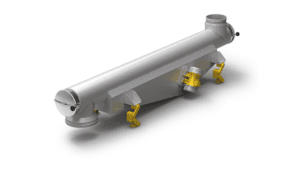
Tube Conveyor

Fully enclosed conveying over distances up to seven metres. The enclosure is the point: it contains dust, keeps product in, and handles highly abrasive material, bulk food, chemicals and fertilisers without the wear a belt would take. Floor-mounted or suspended, and the tube can be rotated to move the material’s contact path as it wears.
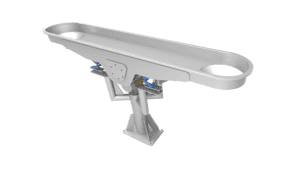
Reversing Feeder

A vibratory alternative to a screw or belt conveyor, feeding two directions from one unit. Enclosed against dust and cross-contamination but open-trough underneath for cleaning, in HACCP-compliant stainless. Common on filling stations and ahead of multihead weighers.
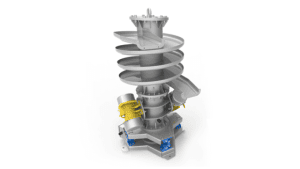
Spiral Elevating Conveyor

Lifts product up to seven metres in the footprint of a column, using an engineered spiral flight path driven by vibratory motors. Where floor space rules out an inclined conveyor run, this is the answer. Stainless steel, base or overhead drive, and it integrates with your electronic controls.
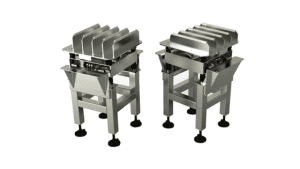
Vibratory Compaction Table

Settles and shapes filled bags to get maximum net volume into the pack. Better presentation on shelf, more bags per pallet and lower transport cost per tonne. Stainless steel, with a safety clutch fitted for operator protection.
CONVEYORS

Belt and vibratory conveying built to the same hygiene standard as the rest of the range — 304 stainless frames, FDA-approved belting and running gear, bead-blasted externally with a polished internal finish. Drives are SEW geared motors on 415V three-phase, with control enclosures in stainless rated IP66, fitted with stop-start, E-stop and belt interlocks. The range covers the four jobs a packing line actually needs: storing product, lifting it, moving it along, and getting filled packs into shape before they’re cased.

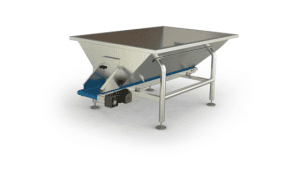
Accumulation Conveyor

Holds a buffer of product and meters it slowly into the next operation. It’s what stops double handling, and it decouples an upstream process from a downstream one so a short stop at one end doesn’t empty or flood the other.
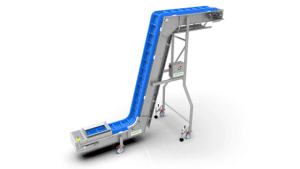
Mi-CON Modular Incline Conveyor

Elevates product from floor level to the top of a multihead weigher or filler, on cleated belting with sidewall guides so nothing spills on the climb. Built from standardised modules, which makes it quick to assemble, quick to install and straightforward to reconfigure when the line changes. FDA-approved components throughout.
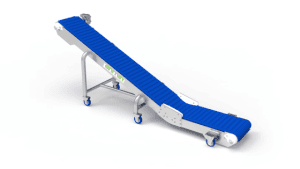
Takeaway Conveyor

Moves finished packs away from the bagger or filler under control. Full stainless construction, low profile so it tucks under a discharge without a step, with belt material chosen for the pack it’s carrying.
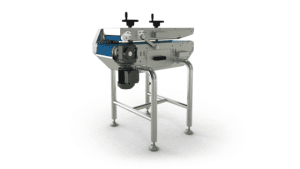
Bag Flattener Conveyor

Shapes filled bags with controlled vibration and pressure as they pass. Flatter bags use less film per pack, stack more efficiently in the case, and give your checkweigher a consistent profile to read — which improves weight accuracy rather than just appearance.
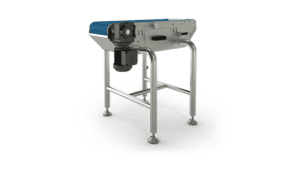
Bag Conditioning Conveyor

Takes out-of-shape bags coming off a vertical filling machine and settles them into a square, consistent pack. Better presentation on shelf and more packs per pallet going out the door.
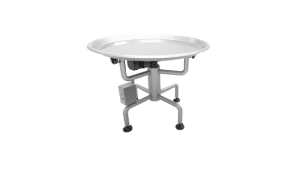
Rotary Packing Table 

Collects finished packs in a rotating pool so an operator can pack off at their own pace rather than at the machine’s. Stainless steel, IP66 rated, with a safety clutch for operator protection. Fixed or variable speed.

FAQ

What is vibratory equipment used for?

Vibratory equipment stores, meters and moves product between process steps — out of bulk, up to a weigher, across lanes, or along to the next machine. It's what keeps a packing machine fed at a steady rate instead of starved one minute and flooded the next.

What's the difference between electromagnetic and electromechanical feeders?

An electromagnetic feeder vibrates the tray with an electromagnetic drive and no rotating parts, giving instant start and stop and very fine control at low rates. An electromechanical feeder uses twin counter-rotating vibratory motors, which suits heavier, denser and more abrasive duties at higher volumes.

Which one suits fragile product?

Electromagnetic, in most cases. Fine control at low feed rates and a near-instant stop mean product moves gently and only as fast as the downstream machine needs it — which matters for chocolate, coated snacks, biscuits and anything that chips or cracks.

How big a hopper do I need?

That depends on how often you want an operator attending the machine. Standard capacities run from 50 to 1,000 litres, and we usually size to between 10 and 30 minutes of production with a low-level warning, so product goes in before the line runs dry rather than after it stops.

Can it feed a multihead weigher?

Yes, and it's one of the most common configurations. A hopper feeder meters out of bulk, a Mi-CON incline conveyor lifts product to the top of the weigher on cleated belt with sidewall guides, and level sensing between them pauses the feed when the weigher is full.

What is it made from?

304 stainless steel product contact and supports as standard, bead-blasted externally with a polished internal finish, and FDA-approved belting on conveyors. Equipment is built to HACCP and to the hygiene standards of the Australian food and pharmaceutical industries.

Will the vibration affect my building?

It shouldn't. Isolating springs — coil springs, rubber isolators, air bags or torsion mounts, selected per duty — are designed to keep around 98% of the vibration out of the supporting structure. Elevated installations need the supporting steel braced, and we'll tell you what's required at design.

Can the feed rate be adjusted?

Yes. Variable speed control is standard and wires into the packing machine's main controls, so rate can be tuned to the machine and changed by recipe rather than by hand at the feeder.

Can you handle non-food products?

Yes. The electromechanical platform in particular runs well beyond food — mining, quarrying, chemicals and fertilisers — where product is denser, more abrasive and handled in larger volumes. Tube conveyors are specifically built for abrasive duties.

Do I need a conveyor or a vibratory feeder?

Feeders meter and move product horizontally over short distances with precise rate control. Conveyors carry it further, lift it, or buffer it. Most lines use both, and the handover point between them is where the design work matters.

How long does installation take?

In the order of five working days for mechanical installation and two for commissioning on a multi-item system, with lead time around 16 weeks from confirmation of drawings. Lifting equipment and mains power connection are normally excluded from scope.

Do I buy this from HMPS or from Enmin?

Either. Enmin is part of HMPS Group, so you can go direct for a standalone feeder or conveyor, or take it as part of a complete packing line with the bagger, case packer and palletiser on one control platform and one point of support.

Scroll to Top